

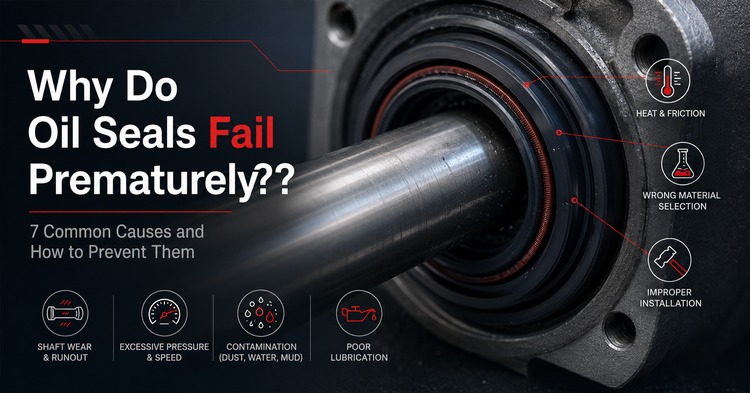
Oil seals are small components within much larger mechanical systems, yet their failure can lead to lubricant loss, contamination, bearing wear, reduced equipment efficiency, and unexpected downtime.
When premature oil seal failure occurs, replacing the damaged seal may provide only a temporary fix. An oil seal is part of a complete sealing system, and its performance depends on material compatibility, operating temperature, speed, pressure, shaft condition, lubrication, installation quality, and environmental contamination.
For equipment manufacturers, maintenance engineers, and industrial buyers, the better question is not simply:
Which oil seal is best for this application?
A more useful question is:
Why did the existing oil seal fail, and is the selected seal truly suitable for the actual operating conditions?
WSI manufactures sealing products for automotive and industrial applications. For the failure issues discussed in this article, its Gearbox Seals and Rotary Shaft Seals are particularly relevant to rotating machinery, drivetrain systems, gearboxes, and other industrial equipment.
Why Does Premature Oil Seal Failure Happen?
The main purpose of an oil seal is to retain lubricants or other fluids inside a system while helping prevent dust, dirt, moisture, and other contaminants from entering.
Under real operating conditions, however, a sealing system must manage several factors at the same time. Rotation creates friction, friction generates heat, pressure can affect the sealing interface, shaft condition influences wear, and the fluid may interact chemically with the seal material.
As a result, oil seal leakage is often a visible symptom rather than the root cause itself.
For example, an oil seal may have the correct dimensions but still fail because:
- The material is incompatible with the lubricant.
- The actual sealing-lip temperature is higher than expected.
- Shaft runout is excessive.
- The sealing lip was damaged during installation.
- Abrasive contaminants entered the sealing area.
Not necessarily. Product quality matters, but premature oil seal failure may also result from unsuitable materials, poor shaft condition, improper installation, excessive temperature or speed, inadequate lubrication, or environmental contamination.
1. Wrong Material Selection Can Cause Premature Oil Seal Failure
Different elastomers and sealing materials provide different levels of resistance to oils, fuels, hydraulic fluids, chemicals, temperature, ozone, and outdoor exposure.
If the selected material is incompatible with the fluid or operating environment, the seal may experience:
- Swelling
- Hardening
- Softening
- Cracking
- Loss of elasticity
- Lip deformation
These changes can reduce sealing performance and eventually lead to leakage.
A material that performs well with one mineral-based lubricant may not necessarily be suitable for a synthetic fluid, an aggressive additive package, or a higher-temperature environment.
For this reason, material selection should consider not only dimensions and nominal temperature limits, but also the actual fluid, continuous and peak temperatures, pressure, speed, environmental exposure, and expected service life.
WSI supports material research, rubber mixing, physical property testing, material analysis, and quality inspection for different sealing requirements. For a broader introduction to oil seal material selection, see Materials Matter – The Science of Oil Seal Composition.
How to Prevent Material-Related Oil Seal Failure
Before selecting an oil seal, confirm:
- The exact lubricant, oil, or chemical medium
- Normal and peak operating temperatures
- Exposure to chemical additives
- Contact with water, ozone, UV, or outdoor conditions
- Expected maintenance intervals and service life
An oil seal should not be selected simply because its dimensions match the previous component.
2. Excessive Heat and Friction Can Shorten Oil Seal Service Life
High temperature is a major contributor to premature oil seal failure, but ambient temperature alone does not tell the whole story.
During operation, the sealing lip remains in contact with a rotating shaft. This creates friction and generates additional heat directly at the sealing interface. The actual temperature at the sealing lip may therefore be higher than the surrounding equipment temperature.
Factors affecting friction and heat generation include:
- Shaft speed
- Shaft diameter
- Circumferential speed
- Seal lip load
- Lubrication condition
- Seal material
- Heat dissipation
This is why high-speed applications should not be evaluated based only on RPM. The same rotational speed can create very different surface speeds when shaft diameters differ.
WSI's industrial product range includes Rotary Shaft Seals designed to retain lubricant and help prevent contaminant ingress in rotating components, as well as Gearbox Seals for drivetrain and transmission applications.
No. Shaft diameter, circumferential speed, friction, lubrication, actual operating temperature, seal design, and heat dissipation should also be considered.
3. Improper Installation Is a Common Cause of Oil Seal Leakage
Even a correctly selected oil seal can fail shortly after installation if the sealing lip is cut, scratched, folded, or deformed during assembly.
Common installation problems include:
- Using sharp tools near the sealing lip
- Installing the seal at an angle
- Forcing the lip over sharp edges, splines, threads, or burrs
- Applying uneven force during press-fitting
- Installing the seal in the wrong direction
- Installing the seal at an incorrect depth
- Allowing dirt or metal particles to remain on the shaft or seal
Small cuts or scratches created during installation can become leakage paths once the equipment starts operating.
How to Prevent Installation-Related Leakage
Use proper installation tools and protective sleeves or guides where required. Inspect the shaft lead-in area for burrs, sharp edges, threads, or other features that could damage the sealing lip.
For OEM production, installation should follow standardized assembly procedures rather than relying entirely on individual operator experience.
4. Shaft Wear, Surface Finish, and Runout Can Lead to Oil Seal Failure
When a new oil seal continues to leak, the problem may not be the new seal itself. The actual cause may be the shaft or surrounding mechanical condition.
Common shaft-related problems include:
- Wear grooves
- Scratches
- Corrosion
- Incorrect surface finish
- Insufficient surface hardness
- Shaft runout
- Eccentricity
- Misalignment between the shaft and housing
The sealing lip must maintain stable contact with the shaft surface during operation. If a wear groove already exists where the old seal operated, a replacement seal installed at the same location may quickly develop the same leakage problem.
A surface that is too rough may accelerate lip wear, while excessive dynamic runout or eccentricity can prevent the sealing lip from maintaining consistent contact.
Because the original cause may still be present. Shaft wear, grooves, scratches, excessive runout, eccentricity, or misalignment can prevent even a new oil seal from maintaining a stable sealing interface.
5. Excessive Pressure and Speed Can Cause Oil Seal Failure in Industrial Applications
Not every oil seal is designed for high pressure or high rotational speed.
In many conventional radial lip seal designs, increasing pressure can increase the load at the sealing interface, which may lead to greater friction and heat generation. At higher shaft speeds, the seal must also maintain stable contact while controlling lubricant retention and wear.
If operating conditions exceed the capabilities of the selected seal design or material, possible consequences include:
- Excessive lip wear
- Abnormal heat generation
- Material hardening
- Lip deformation
- Leakage
- Shortened service life
This is particularly important for oil seals used in gearboxes, transmissions, motors, and rotating machinery.
The correct oil seal should therefore be selected according to actual pressure, speed, temperature, lubrication, and equipment conditions—not simply because the dimensions match.
6. Dust, Mud, and Water Can Accelerate Oil Seal Failure in Harsh Environments
For equipment operating in clean indoor environments, the main challenge may be retaining lubricant. For construction machinery, agricultural equipment, mining machinery, and other heavy-duty systems, keeping contaminants out can be equally important.
Typical contaminants include:
- Abrasive dust
- Sand
- Mud
- Water
- Metal particles
- Grit and debris
Once abrasive particles enter the sealing interface, they can accelerate wear on both the sealing lip and shaft surface. This may create a leakage path and allow contamination to reach bearings, gearboxes, or other critical components.
WSI provides sealing solutions for heavy machinery operating under heavy loads, abrasive dust, hydraulic pressure, mud, water, and grit. These applications may include Hydraulic Cylinder Seals, Exclusion and Mud Seals, and Heavy-Duty Rotating Seals.
How to Reduce Contamination-Related Oil Seal Failure
Depending on the operating environment, engineers should consider:
- Whether an additional dust lip is required
- Whether a wiper or exclusion seal is needed
- The type and abrasiveness of contaminants
- Exposure to mud, water, or outdoor weather
- Cleaning and maintenance intervals
- Whether the primary oil seal requires additional protection
In harsh environments, the sealing objective is not only to keep lubricant inside the equipment. Keeping contaminants out is equally important.
7. Poor Lubrication and Dry Running Can Damage Oil Seals
Adequate lubrication helps reduce friction and wear between the sealing lip and rotating shaft.
If the sealing interface operates with insufficient lubrication or under dry-running conditions, it may lead to:
- Rapid temperature increase
- Accelerated lip wear
- Thermal damage to the sealing lip
- Material hardening
- Surface damage
- Premature leakage
A thin lubricating film at the seal lip is important for many radial oil seal designs. Lubrication conditions should therefore be considered during assembly, startup, and normal operation.
Start with five areas: material compatibility, actual temperature and speed, shaft condition, installation quality, and lubrication. If the equipment operates around dust, mud, water, or abrasive contaminants, environmental protection should also be inspected.
What Should You Check After Oil Seal Leakage Occurs?
When oil seal leakage occurs, immediately replacing the old component may restore operation temporarily. However, recurring leakage usually requires a broader inspection.
The following areas should be checked:
| Inspection Area | What Should Be Checked? |
|---|---|
| Oil seal body | Wear, cracking, deformation, hardening, or unusual damage |
| Sealing lip | Uneven wear, cuts, heat damage, or abnormal contact patterns |
| Material | Compatibility with actual fluid, temperature, and environment |
| Shaft surface | Grooves, scratches, corrosion, or unsuitable surface finish |
| Shaft motion | Runout, eccentricity, vibration, or misalignment |
| Pressure and speed | Whether actual conditions exceed the seal's intended range |
| Lubrication | Dry running or insufficient lubrication |
| External environment | Dust, mud, water, grit, or other contaminants |
| Installation | Correct tools, direction, alignment, and assembly procedure |
Effective failure investigation should look beyond the damaged seal itself. The goal is to connect the observed damage with the operating environment, shaft condition, material behavior, and equipment mechanics to identify the actual root cause.
What Information Should You Provide When Selecting an Oil Seal?
Whether selecting a standard oil seal or discussing a custom sealing solution, engineers and buyers should prepare as much application information as possible.
Useful information includes:
- Shaft diameter
- Housing bore
- Seal width
- Normal operating temperature
- Maximum or peak temperature
- Operating pressure
- Rotational speed
- Lubricant, oil, chemical, or other medium
- Shaft material and surface condition
- Exposure to dust, water, mud, ozone, or outdoor environments
- Expected service life
- Maintenance interval
- Existing drawings, photos, or failed samples
The more complete the information, the easier it becomes to determine whether a standard product is suitable or whether the application requires a different material, seal design, or customized solution.
How Can an Oil Seal Manufacturer Help Solve Recurring Seal Failures?
For a straightforward replacement application, selecting an oil seal with the correct dimensions may be sufficient. For recurring leakage, unusual wear, demanding operating conditions, or OEM product development, the capabilities of the oil seal manufacturer become much more important.
A capable manufacturer should be able to consider:
- Material compatibility
- Operating temperature
- Pressure and speed
- Dynamic motion
- Shaft condition
- External contamination
- Prototype development
- Durability testing
- Failure investigation and fault-source tracing
WSI provides product development support covering conceptualization, design, discussion, prototyping, and testing. Its technical capabilities also include material composition analysis, application research, product quality control, and fault-source tracing.
WSI's Experimental Testing Center includes equipment for rubber hardness, tensile testing, dynamic fatigue, low-temperature brittleness, high-temperature aging, ozone resistance, compression set, rotating durability, reciprocating durability, and salt spray testing.
WSI's portfolio includes Industrial Seals, Automotive Seals, Hydraulic Seals, Household Appliance Oil Seals, and Static Oil Seals. For the types of recurring failures discussed in this article, products such as Gearbox Seals and Rotary Shaft Seals are particularly relevant to rotating machinery and drivetrain applications.
For OEMs, engineers, maintenance teams, and buyers dealing with recurring oil seal failure, providing complete operating conditions and failure information can help identify a sealing solution better suited to the actual application.
Conclusion
Premature oil seal failure is rarely caused by a single factor. In many cases, the visible leakage problem is linked to a combination of material selection, operating conditions, shaft condition, installation quality, lubrication, or environmental contamination.
The most effective approach is therefore to evaluate the complete sealing system rather than repeatedly replacing the same oil seal without identifying the underlying cause.
As an experienced oil seal manufacturer, WSI combines oil seal and industrial seal products with product development, material research, testing, and fault-source tracing capabilities. Matching the seal to the actual operating conditions is the key to improving reliability and reducing the risk of premature failure.
Need Help Solving Recurring Oil Seal Failure?
Share your operating conditions, shaft dimensions, temperature, speed, pressure, lubricant, or existing failure information with WSI. Our team can help evaluate sealing requirements and identify a solution better suited to your application.
Contact Us