

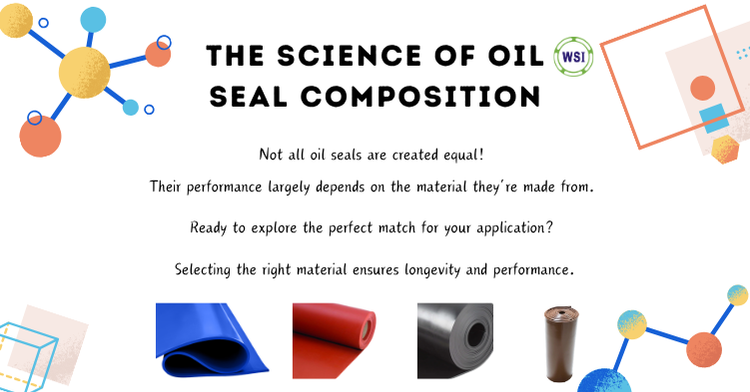
When it comes to oil seals, the choice of material is not just a matter of preference—it's the foundation of their performance. The material of an oil seal determines its durability, effectiveness, and ability to withstand harsh operating conditions. From resisting high temperatures to enduring constant friction, the science of oil seal composition plays a pivotal role in machinery reliability.
1. Why Material Selection Is Critical?
Challenging environments, including extreme temperatures, pressure fluctuations, and exposure to various chemicals, expose oil seals. The material must not only withstand these conditions but also maintain its integrity over time. Choosing the wrong material can result in seal failure, leading to leaks, contamination, and costly downtime.
2. Common Materials Used in Oil Seals
Each oil seal material has unique properties tailored to specific applications:
- Nitrile Rubber (NBR):
Known for its affordability and versatility, nitrile rubber is one of the most commonly used materials for oil seals. It offers excellent resistance to petroleum-based oils and fuels, making it ideal for automotive and industrial applications. However, it may not perform well in high-temperature or chemically aggressive environments.
- Silicone Rubber:
Silicone is prized for its ability to withstand extreme temperatures, ranging from -60°C to 200°C. This makes it suitable for applications like automotive engines and industrial equipment exposed to both freezing and scorching conditions. Additionally, silicone's flexibility ensures a secure seal in dynamic operations.
- Fluoroelastomers (FKM/Viton®):
Fluoroelastomers excel in high-temperature and chemically aggressive environments. They offer superior resistance to oils, fuels, and corrosive substances, making them the go-to choice for demanding applications such as aerospace, chemical processing, and high-performance engines.
- Polyurethane (PU):
Polyurethane combines toughness and elasticity, making it ideal for seals exposed to heavy wear and tear. It's often used in hydraulic systems and applications requiring resistance to abrasion and tearing.
- PTFE (Polytetrafluoroethylene):
PTFE is a high-performance material known for its low friction and resistance to almost all chemicals. It can withstand extreme temperatures and is commonly used in seals for high-speed or precision applications.
3. Matching Material to Application
Selecting the right material involves analyzing the operating conditions:
- Temperature: Will the seal face extreme heat or cold?
- Chemical Exposure: Are there aggressive chemicals or fuels present?
- Pressure and Speed: How much force and rotational speed will the seal endure?
By considering these factors, manufacturers can recommend materials that balance cost, performance, and longevity.
4. Advances in Material Science
The oil seal industry continuously evolves, with new materials being developed to meet emerging demands. For instance, hybrid materials now combine the benefits of multiple compounds, such as durability and heat resistance, in a single seal. These advancements ensure oil seals remain reliable even in cutting-edge applications like electric vehicles and renewable energy systems.
5. The WSI Advantage in Material Selection
At Well Oil Seal Industrial Co., Ltd., we understand the importance of material science. Our team meticulously selects and tests materials to ensure our seals meet the highest standards of performance and durability. Whether it's a high-speed automotive application or a heavy-duty industrial setting, our oil seals are designed to last.
The right material can make or break an oil seal's performance. By understanding the science behind these materials, businesses can choose seals that not only meet their needs but also enhance the efficiency and reliability of their machinery. When it comes to oil seal composition, every molecule matters.